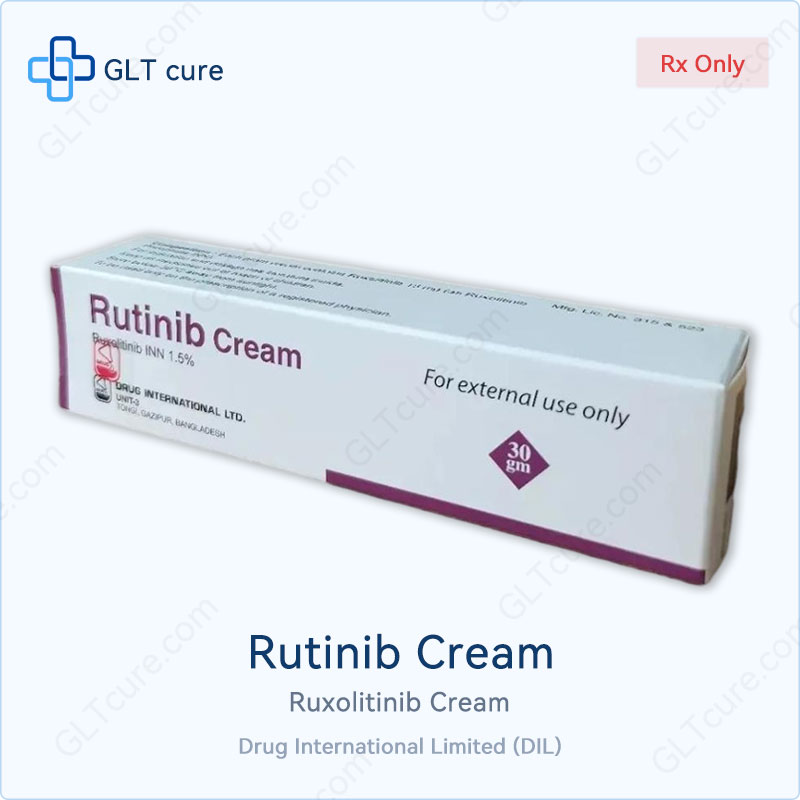
Rutinib Ruxolitinib 1.5% Cream 30g | Drug International | GLT
Tap "Request a Quote" to open WhatsApp — the product details are already filled in. Just add your quantity and destination country.
- We reply within 24 hours with pricing, availability & COA
- Serves individuals and institutions worldwide
Prefer email? [email protected] · +86 15234153837
Rutinib Cream is Drug International Limited's generic of topical ruxolitinib, packed as a 30g tube of 1.5% cream for external use. It is made in Bangladesh and sold as an export pack, which is why the carton carries export labelling rather than a local retail pack.
Where it fits in vitiligo and eczema care
Rutinib is used for the same two indications as the originator cream: mild-to-moderate atopic dermatitis and nonsegmental vitiligo. In eczema it reduces inflammation and itch; in vitiligo it aims to interrupt the immune attack on melanocytes so pigment can return to treated patches.
Why the 30g pack matters
Vitiligo treatment is often limited to a small area such as the face or hands, and a 30g tube matches that coverage better than a large pack that may expire before it is finished. The concentration stays at 1.5%, so the smaller pack changes how long it lasts, not how strong it is.
Application routine
A thin layer twice daily, at least eight hours apart, on affected skin only. Keep vitiligo treatment within 10% of body surface area, avoid the eyes, mouth and other mucous membranes, and wash hands after use unless the hands are the treatment site.
- Ruxolitinib 1.5% cream, 30g tube
- Manufactured by Drug International Limited (DIL), Bangladesh
- Export pack for external use only
- Twice-daily application, eight hours apart
- Vitiligo use limited to 10% of body surface area
- Store at room temperature, away from moisture
Rutinib or Ruxonib
Both are Bangladeshi generics of the same molecule at the same strength, produced by different companies: Rutinib comes from Drug International and Ruxonib from Ziska Pharmaceuticals. The choice usually comes down to which manufacturer's documentation and pack size a buyer needs, not to a difference in the active ingredient.
Timelines and review points
Facial patches generally respond before hands and feet, and most clinicians review progress at 24 weeks before deciding whether to continue. Stopping early is the most common reason patients conclude the cream did not work.
Related Oncology Products
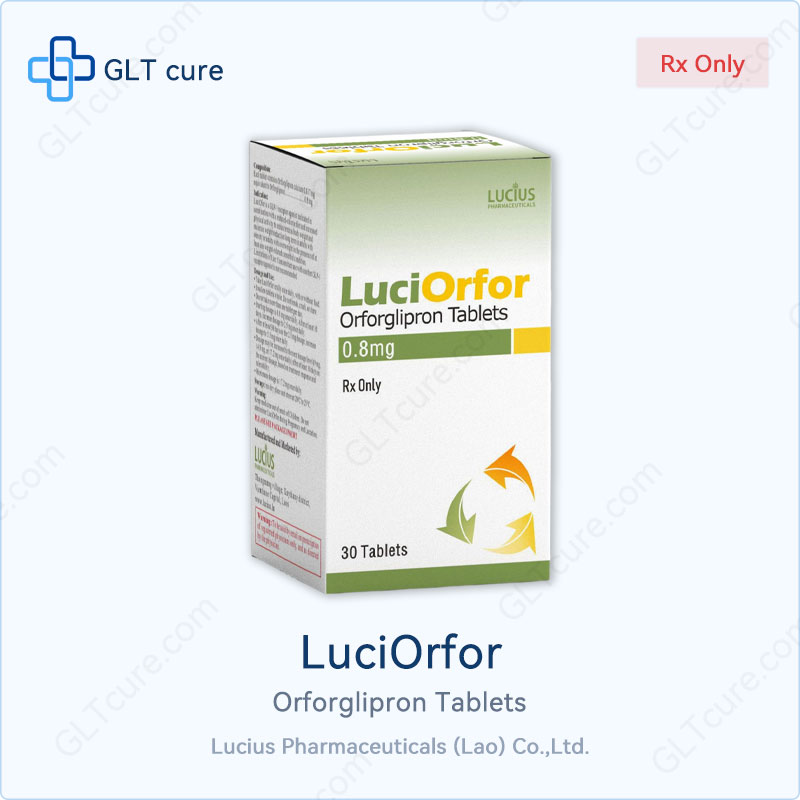
Orforglipron (LuciOrfor) 0.8–17.2mg Tablets | Laos Generic Oral GLP-1 | GLT

Palutini (Baricitinib) 4mg | Generic JAK1/JAK2 Inhibitor | Trans Continental Life Science & Pharmaceuticals (TLPH) | GLT
Baricent (Baricitinib) 2mg | Generic JAK1/JAK2 Inhibitor | Incepta Pharmaceuticals Ltd. | GLT
Olumiant (Baricitinib) 2mg/4mg Tablets | JAK1/JAK2 Inhibitor | Eli Lilly USA | GLT
Barinat (Baricitinib) 4mg | Generic JAK1/JAK2 Inhibitor | Natco Pharma Limited | GLT
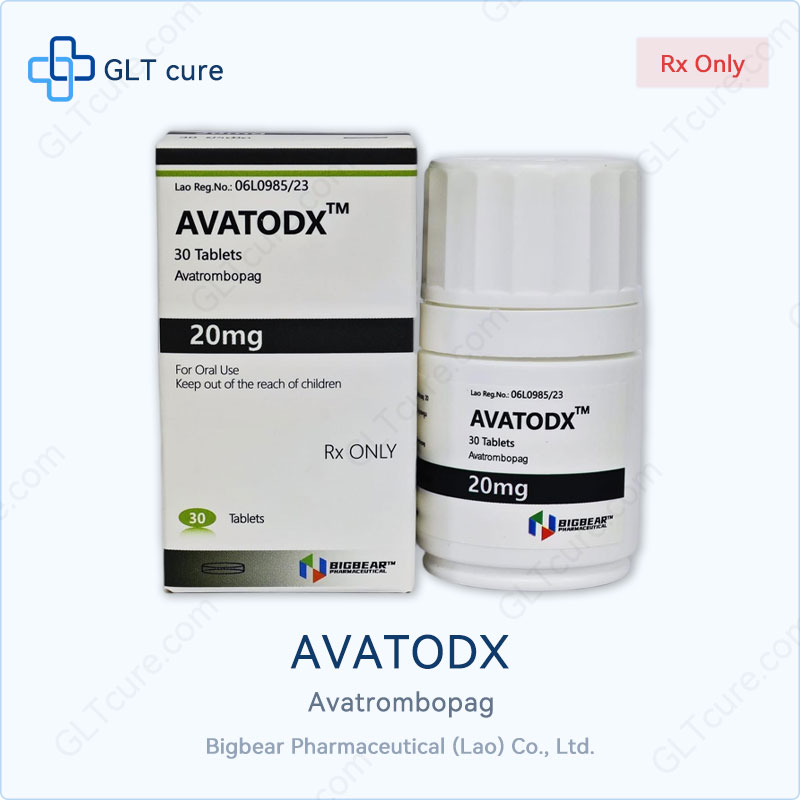
AVATODX (Avatrombopag) 20mg*30 Tablets | Bigbear Pharmaceutical Laos | GLT
Tirzema (Tirzepatide) 2.5/5/7.5mg/0.5mL Single-Dose Pen | Incepta Bangladesh | GLT